 Partager
 Tweeter

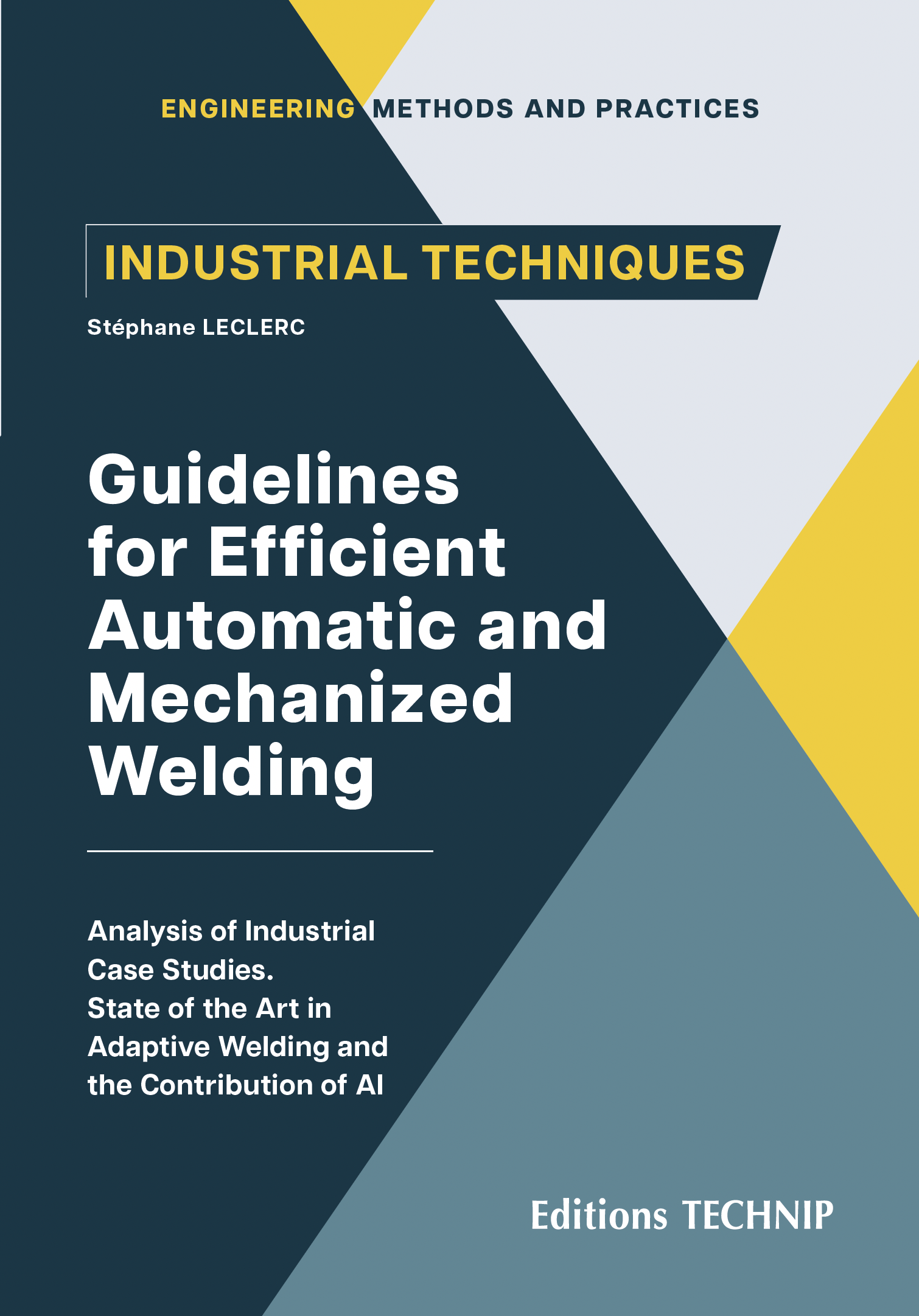
Guidelines for efficient automatic and mechanized welding
Analysis of industrial case studies. State of the art in adaptive welding and the contribution of AI
Auteurs : LECLERC Stéphane
ISBN : 9782710812067
broché 16 x 23 cm 96 pages
Date de publication : Octobre 2026
 Ajouter au panier 36 €
 Feuilleter un extrait
This series is intended for engineering students, undergraduate and graduate students, as well as practicing engineers and senior technicians seeking to update or expand their education in the engineering sciences.
After forty years dedicated to the design and development of complex welding solutions, Stéphane Leclerc shares his experience in welding within confined spaces with high strategic stakes, particularly in the nuclear and aquatic sectors.
Based on the analysis of thirty concrete industrial case studies, the author highlights best practices and proven optimization methods used by major nuclear industry players—both manufacturers and client organizations. A special focus is placed on adaptive welding, followed by an overview of the contributions of expert systems and artificial intelligence applied to welding over a forty-year period, as well as prospective future developments.
These guidelines provide a pragmatic resource for engineers (IWE), technicians (IWT/IWS), manufacturing or maintenance managers, and researchers involved in designing innovative welded solutions. It is specifically aimed at professionals in high-constraint industrial sectors (nuclear, offshore) and orbital welding operators.
Table des matières :
Chapter 1 ❚ Mechanized/automated welding experience
Chapter 2 ❚ Orbital welding of piping
Chapter 3 ❚ Self-adaptive welding – the contribution of AI
Chapter 4 ❚ Design of a welded solution: key items and methods
Chapter 5 ❚ Guide to developing a robust welding process/procedure